

Viene dal Canada per tentare la scalata al ciclismo World Tour, ma un brutto incidente nel 2022 lo fa sprofondare in fondo al tunnel ponendo quasi termine alla sua carriera. Non molla, si rialza, scrive un libro di successo per gli aspiranti Pro Cyclist e va a vincere la Ötztaler Radmarathon 2024.
Intervista a cura di Leonardo Olmi.
(the ENGLISH TEXT is at the end of the italian article)

Abbiamo avuto il piacere di conoscere Jack Burke, il Re delle Granfondo 2024, che ci ha gentilmente rilasciato in esclusiva questa intervista, piena di spunti molto interessanti sugli allenamenti e la nutrizione per fare ciclismo amatoriale ad alti livelli. Non vi perdete neanche una riga di quanto ci ha raccontato.
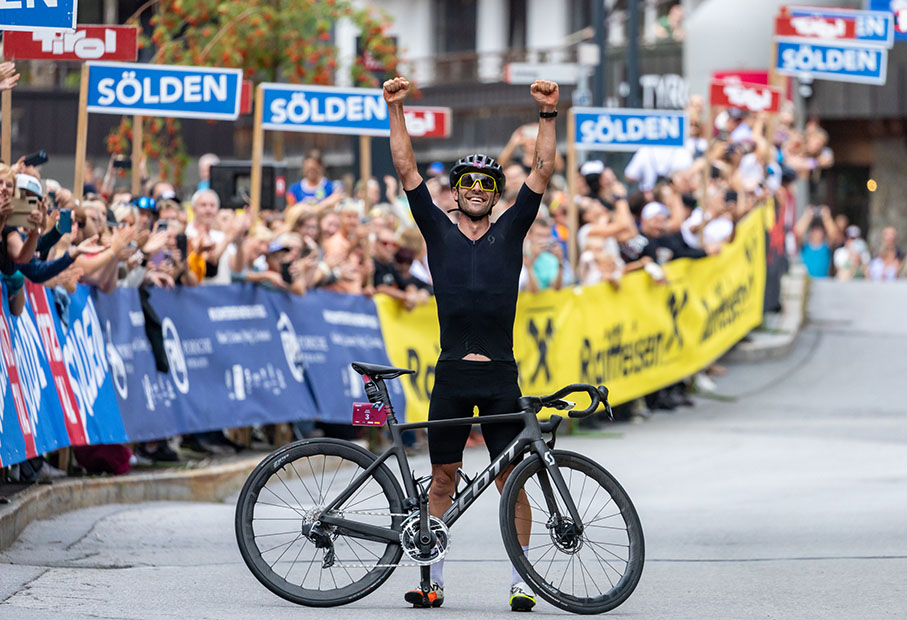
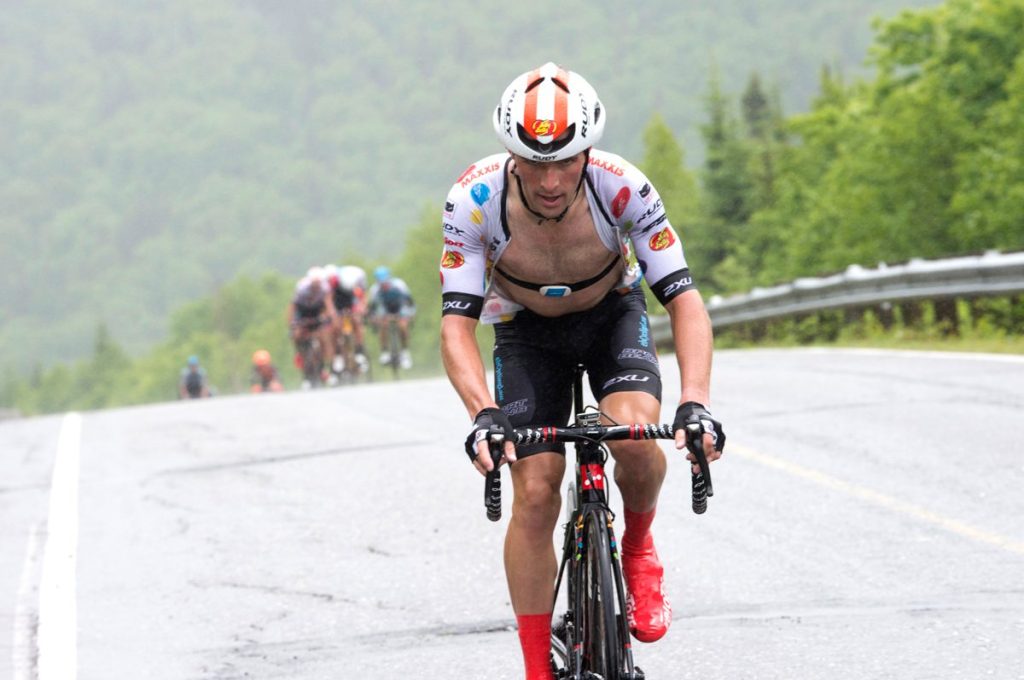
Jack Burke nasce a Toronto (Canada) classe 1995. Da junior era uno dei migliori ciclisti del Nord America, ma aveva anche una grande passione per lo sci. Professionista dal 2016 milita in varie squadre Continental, tra cui la Leopard Trek, puntando al ciclismo World Tour, ma alla fine del 2022 viene investito da un’auto in Austria mentre si allenava riportando una frattura alla schiena, un’emorragia cerebrale e uno spaventoso trauma permanente al viso.
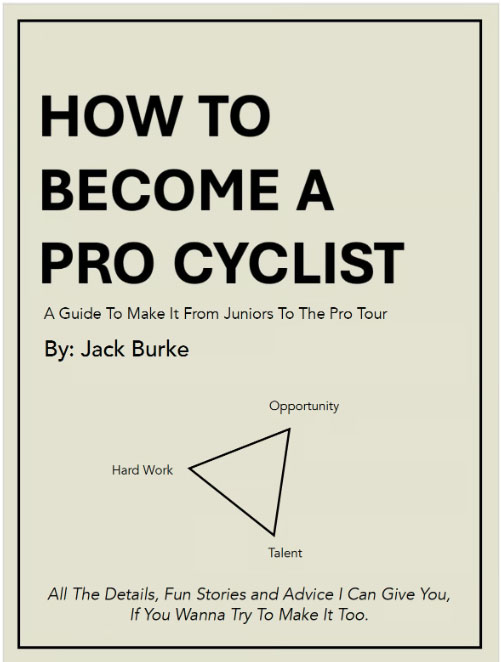
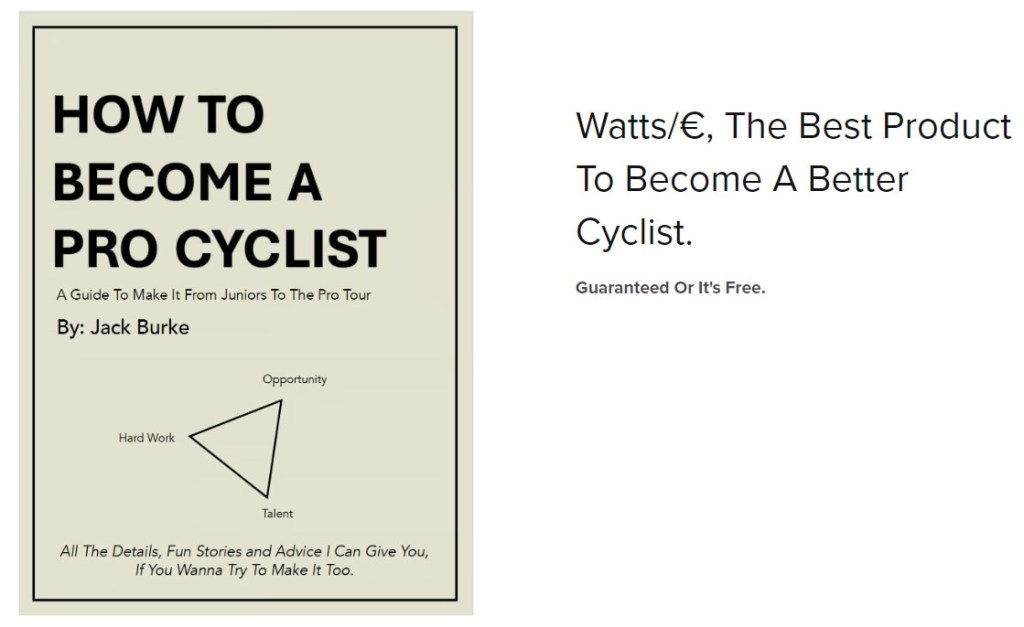
Per aiutarsi a pagare le spese mediche, ha iniziato a scrivere una guida all’allenamento che si è trasformata nel suo primo libro “How To Become A Pro Cyclist with Jack Burke” (come diventare un ciclista professionista con Jack Burke). Il libro è decollato e ha avuto un enorme successo grazie a così tanti ciclisti professionisti e coach che lo hanno condiviso e consigliato.
https://howtobecomeaprocyclist.com
Dopo il successo del primo libro, il suo podcast ha iniziato a crescere con professionisti e preparatori che hanno adorato il libro. Il tema dello show è “fornire informazioni gratuite sul ciclismo e sull’allenamento dai migliori corridori e coach del mondo“.
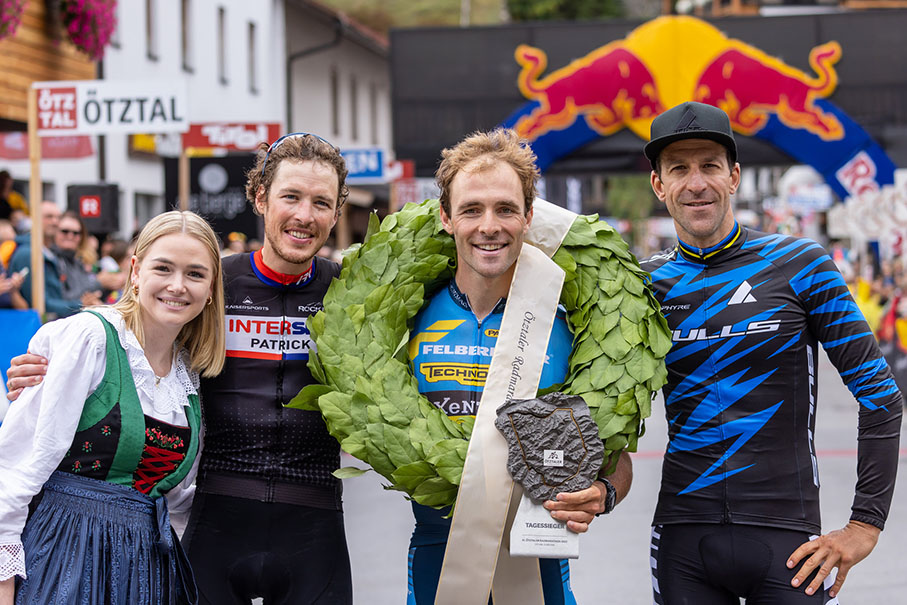
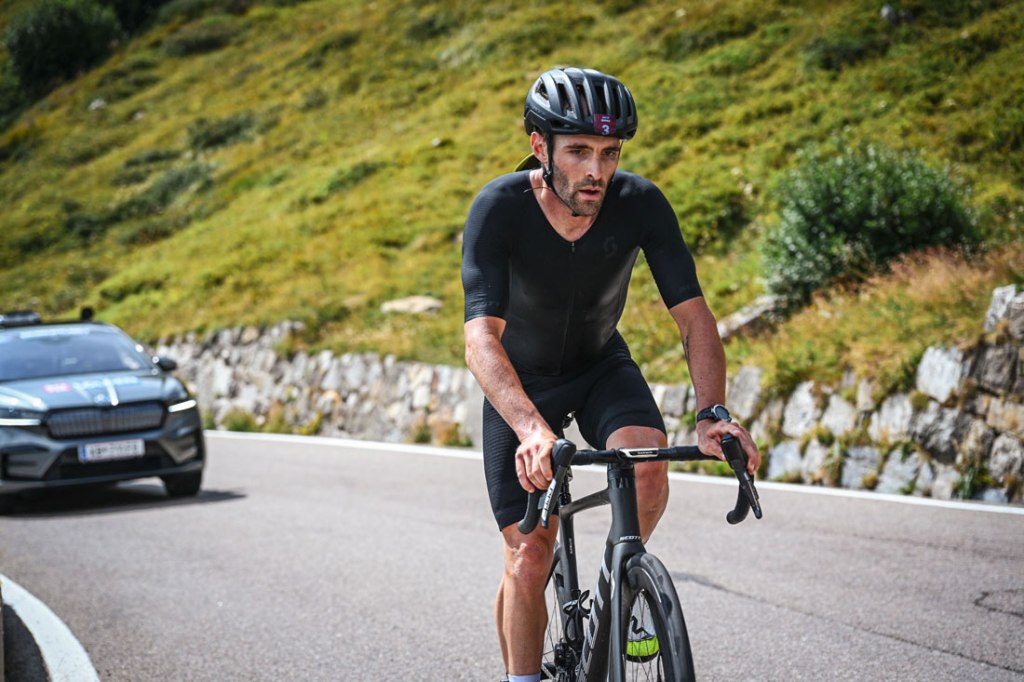
Dopo la vittoria di quest’anno alla Ötztaler Radmarathon (anche se aveva già vinto l’edizione 2022 dopo un altro incidente ad inizio della stessa stagione dove si era rotto il bacino) Jack Burke è entrato nel cuore degli amatori che lo hanno visto trionfare a Sölden in solitaria con ben oltre 10 minuti di vantaggio sugli inseguitori con un tempo di 6h49’14” vicino al record della gara. Ma la sua vittoria valeva il doppio dopo quello che Jack aveva passato nei due anni precedenti. I suoi podcast, le sue storie su Instagram ed i suoi allenamenti estenuanti su Alpi e Dolomiti scaricati su strava con imprese matte, come la sua ultima scalata autunnale con Kom sullo Stelvio, lo hanno reso sempre più celebre e seguito dai ciclisti amatoriali. Ma diamo la parola a Jack Burke.
1) A quanti anni hai iniziato ad andare in bici e sciare in Toronto dove sei nato? Perché hai deciso per la carriera di ciclista anziché quella di sciatore, altra tua grande passione se non sbaglio?
In realtà sono cresciuto giocando a hockey ai massimi livelli che i bambini possono raggiungere in Canada, poi ho iniziato a correre in mountain bike XC quando avevo 13-14 anni. Sono passato al ciclismo su strada quando avevo 17 anni e poi ho avuto un discreto successo, rapidamente, quindi ho continuato a farlo. Dopo essermi trasferito a Squamish, nella British Columbia per l’università, ho imparato da autodidatta a fare sci di fondo perché mi è sempre sembrato uno sport così figo che non avrei mai potuto fare quando vivevo a Toronto ed è il modo migliore per allenarsi lì in montagna in Canada in inverno. Tuttavia, non ho iniziato a fare sci di fondo fino a quando non avevo poco più di 20 anni.
2) Poi quando e dove è iniziata la tua carriera di ciclista professionista e quando hai deciso di lasciare il tuo paese per trasferirti in Europa? Hai sempre vissuto in Austria?
Mi sono fatto strada fino al top delle corse nordamericane e il mio ultimo anno in Nord America è stato il 2018. Poi l’ultimo passo era quello di venire in Europa, dove sono venuto nel 2019, ho vissuto prima in Germania, ma una volta arrivato in Austria nel 2020, ho deciso che è qui che voglio rimanere perché amo la montagna e la cultura delle persone che vivono qui. Adoro il fatto che gli austriaci vadano pazzi per tutti gli stessi sport che amo io e in Austria è molto più facile fare tutti gli sport che amo rispetto al Canada, dove il nostro accesso alle montagne è molto più remoto e pericoloso.

3) La tua carriera verso il mondo del World Tour è stata perseguitata da due brutti incidenti nel 2022, anche se quello peggiore è stato il secondo con danni cerebrali e problemi alla schiena, ma ti sei sempre rialzato e non hai mai mollato. Raccontaci cos’è successo e com’è andata, poiché entrambe le volte ti sei rialzato e poi sei andato a vincere la Ötztaler Radmarathon.
Nel 2022 ho praticamente puntato tutta la stagione su 3 gare a giugno-luglio, poi mi sono rotto il bacino al ritiro in altitudine prima della prima gara. Ho affrettato la riabilitazione e sono tornato in bici (a malapena) 6 giorni dopo e ho corso 4 settimane dopo, ma ovviamente non al mio meglio. Questo ha praticamente rovinato la mia stagione, ma quando sono tornato in forma, è stata la volta dell’Otztaler, e vincerla è stata una bella conclusione di un anno davvero difficile.
Pensavo che la mia carriera fosse finita nel 2023 dopo essere stato investito da un’auto alla fine del 2022, ma attraverso il mio podcast ho incontrato un preparatore che mi ha convinto a farmi allenare di nuovo, ma non sapevo per cosa ci stessimo allenando. All’epoca stavo solo lavorando alla mia attività, ma i miei amici continuavano a spingermi a riprovare a correre. Il mio coach ha iniziato ad allenarmi a maggio, ho ricevuto una bici da Scott e ora ho vinto tutte le gare che ho fatto quest’anno, il che è stato fantastico. Non avevo intenzione di gareggiare quest’anno, ma amo essere un atleta più di ogni altra cosa e quindi mi sto divertendo e mi sento molto fortunato ad avere l’opportunità di gareggiare di nuovo.

Il ciclismo non non ti regala niente e hai bisogno di molto supporto, quindi non avrei avuto di nuovo quelle opportunità senza queste persone meravigliose e Scott che mi ha dato una bici in prestito.
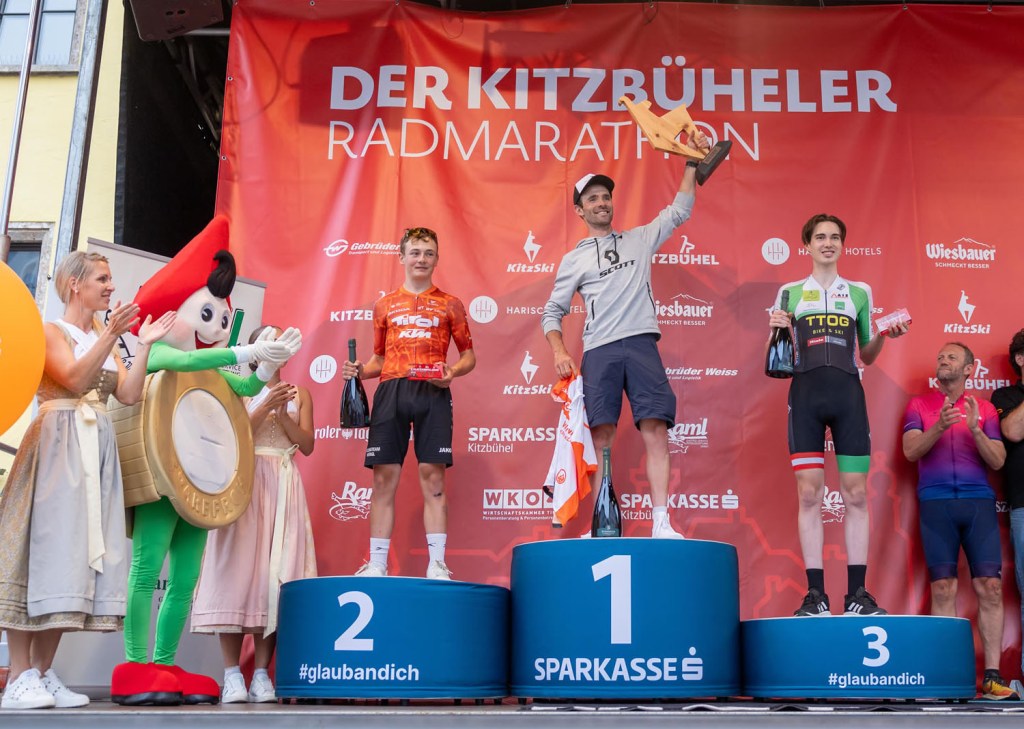
4) Cosa significa vincere la Ötztaler Radmarathon, considerata “la maratona valida come campionato del mondo ufficioso per amatori” e la settimana seguente la Kitzbüheler Radmarathon con dedica di una Gondola, come hai fatto ques’anno?
È un sogno.
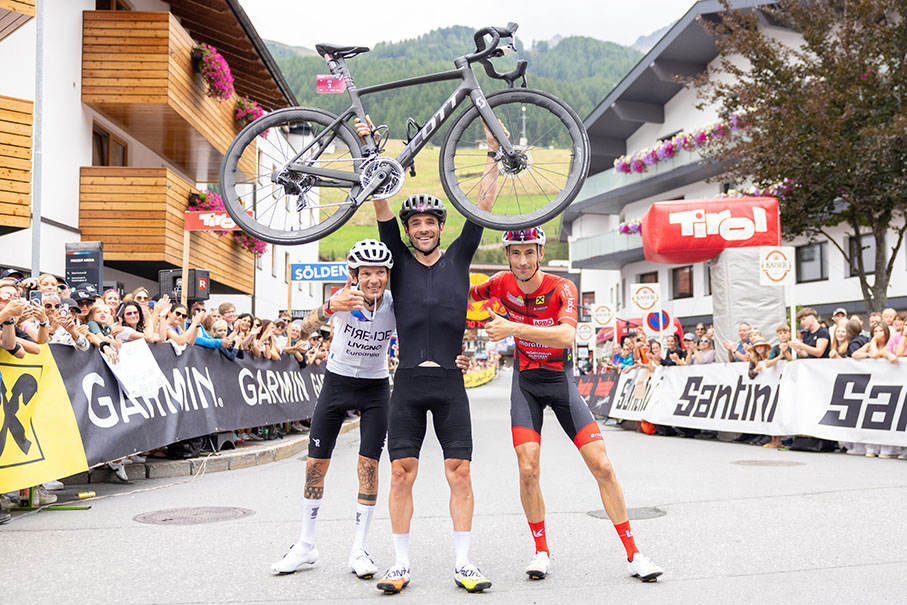
Ho fatto un ritiro con Chris Froome e il team del Tour de France nel 2021, 2 settimane prima del Tour de France nel loro ultimo ritiro per il Tour e ho sempre detto che è stata la settimana più bella della mia vita, ma dopo aver vinto Ötzi e poi Kitzbüel quest’anno, è ancora meglio. Significa davvero molto di più per me di quanto la gente pensi.
Non pensavo che avrei gareggiato di nuovo e in qualche modo il mio coach ha riavuto il vecchio Jack. Ed ho la fortuna di farlo con tutti i miei amici che mi sostengono. Queste sono le mie gare di casa. Vivo qui, quindi così tanti dei miei amici possono venire e farne parte. Farò queste gare quando avrò 100 anni, vivo davvero per queste grandi giornate in montagna ed è quello che farò fino al giorno della mia morte.
5) Parlaci del tuo libro “How To Become A Pro Cyclist with Jack Burke” (come diventare un ciclista professionista con Jack Burke) che oltre ad averti aiutato a pagare le spese post incidente sta avendo anche un grande successo. Quali sono i suggerimenti principali che dai sull’allenamento e l’alimentazione per chi vuole essere un buon amatore o un giovane che aspira al ciclismo professionismo World Tour come aspiravi tu?
Hahaha, questo è così difficile perché la 2a edizione del libro originale che sta per uscire è un libro di testo di 1.000 pagine, quindi è davvero tutto e troppo da riassumere. Se le persone sono interessate ai contenuti che creo, suggerisco sempre di iniziare con il libro e se vuoi ancora di più, allora forse i corsi fanno per te, ma i corsi sono troppo e travolgenti per la maggior parte delle persone poiché originariamente sono stati creati solo per me come la mia gigantesca libreria di informazioni sull’allenamento per aiutarmi a continuare a inseguire i miei sogni atletici.
Il libro è stato quello che ho fatto per me stesso quando ero più giovane per auto aiutarmi, i corsi sono la mia mega biblioteca di tutto per me per continuare a inseguire quei sogni e non dimenticare tutto ciò che ho imparato dai migliori preparatori e corridori del mondo che ho avuto il piacere di conoscere. Ho anche un podcast che è totalmente gratuito, quindi sono ottimi punti di partenza.
L’allenamento e la nutrizione sono così specifici, ma ecco alcune nozioni di base per la maggior parte degli amatori. Fino a quando non sarai in grado di allenarti almeno 15 ore a settimana sulla bici, vai in bicicletta! Concentrati sulle basi e non rubare tempo a quello per fare altre cose che hanno una resa minore.
La maggior parte degli amatori non mangia abbastanza in bicicletta e poi troppo fuori dalla bici. Mangia di più quando ti alleni! Cerca di assumere circa 1,8-2 grammi di proteine per chilo di peso corporeo al giorno. Quasi nessuno lo fa ed è il modo più semplice per perdere peso se lo fai bene.
Il modo più semplice è limitare la quantità di grassi che mangi.
Ogni singolo ciclista che conosco e mi ha chiesto aiuto perché lotta con il proprio peso, sbaglia. Ognuno di loro, se lo facesse solo per 6 settimane ti prometto che perderà peso. Puoi tornare a quello che vuoi o pensi sia salutare dopo, ma fallo per 6 settimane e ti aprirà gli occhi su ciò che potresti aver sbagliato.
• 60-100 grammi di carboidrati all’ora quando ti alleni
• 2 grammi di proteine per chilo di peso corporeo al giorno
Cerca di eliminare tutti i grassi dalla tua dieta! Questo è estremo, quindi è per questo che lo faccio solo per quelle 6 settimane per mostrare alle persone quanto potrebbero sbagliare. Inoltre, non devi impazzire per questo. Un po’ di grasso finirà comunque nella tua dieta e va bene averne un po’ qua e là dal pesce o da un avocado di tanto in tanto, ma fondamentalmente per 6 settimane, senza burro, formaggio, cioccolato, noci, semi. Così tante persone lottano con il loro peso, ma mettono un cucchiaio di burro di cacao a colazione pensando che siano proteine. Sì, e sai quante calorie ci sono dentro? O la sosta al bar a metà corsa e dove prendono un pezzo di torta pensando ai carboidrati di cui hanno bisogno. Sì, anche con un sacco di grasso. Non c’è bisogno di vivere in questo modo, ma se si va un po’ in modo estremo per qualche settimana, 1) si perde peso e 2) si mostra cosa si sta facendo di sbagliato.
Se hai appena azzeccato queste 3 cose, fintanto che ti muovi ogni giorno, penso che sia quasi impossibile non migliorare la composizione corporea o la qualità del tuo allenamento.
6) L’Austria, dove vivi al momento, sembra essere un paese perfetto per l’allenamento in bici, pieno di montagne e salite, forse è troppo freddo in inverno ma non per un canadese come te, poiché ti vediamo sempre allenarti in maniche corte anche sotto la pioggia e con il freddo. Sappiamo che continui a sciare per piacere, ma credi che lo sci possa essere anche un’alternativa invernale per l’allenamento in bicicletta? Tra l’altro mi pare che in passato hai fatto anche parte della nazionale di sci canadese ai mondiali di Cortina 2024.
Assolutamente, per me lo sci di fondo e lo sci-alpinismo sono un allenamento gratuito perché è divertente.
Il mio periodo preferito dell’anno è quando posso sciare e andare in bicicletta nello stesso giorno. Puoi accumulare molto più lavoro, inoltre è semplicemente divertente. Quando scii, penso che tu possa lavorare molto meglio il cuore e i polmoni perché usi tutto il tuo corpo, inoltre lo sci-alpinismo minuto per minuto è lo sport più difficile del mondo.
Almeno per me, quando vado a fare sci-alpinismo sono quasi sempre tra i 2000 e i 3000m di altitudine e quando fai sforzi a questa altitudine, soprattutto gli sforzi VO2 max più brevi, è pazzesco la spinta che ottieni a livello del mare. Ho fatto così tanti campi in altitudine nel corso degli anni e ho provato di tutto. L’altitudine funziona alla grande per me, ma di gran lunga la cosa più folle che vedo da tutti i diversi modi in cui puoi fare allenamento in altitudine è dopo un periodo di tempo in cui ho fatto una sorta di allenamento VO2 max a oltre 2.500, quando scendi al livello del mare, anche solo stando in piedi intorno alla mia frequenza cardiaca è molto più bassa.
Campi ad alta quota normale dove vivi in alto, ti alleni in basso, assolutamente ricevo una spinta, ma i cambiamenti più grandi che noto sono da quell’allenamento davvero alto. Per farlo con lo sci da sci-alpinismo, mi sto solo divertendo.
7) Quali sono il tuo cibo e la tua dieta preferiti? Cosa a mangi a colazione, pranzo e cena durante un periodo di allenamenti intensi? Dai importanza alla carne rossa e le uova per le proteine, alla pasta il riso ed i cereali per i carboidrati, alla frutta e alla verdura per le vitamine, ecc. ecc., o pensi che gli integratori alimentari debbano comunque essere aggiunti?
Se le persone vedessero la mia dieta ora, riderebbero. Sono stato pazzo per la mia dieta per tutta la mia carriera, ma ora lavoro così tanto che mi dimentico di mangiare e voglio solo qualcosa di veloce. L’altra cosa è che “andare veloce/performance food” è piuttosto malsano, ma questo è quello che faccio ora.
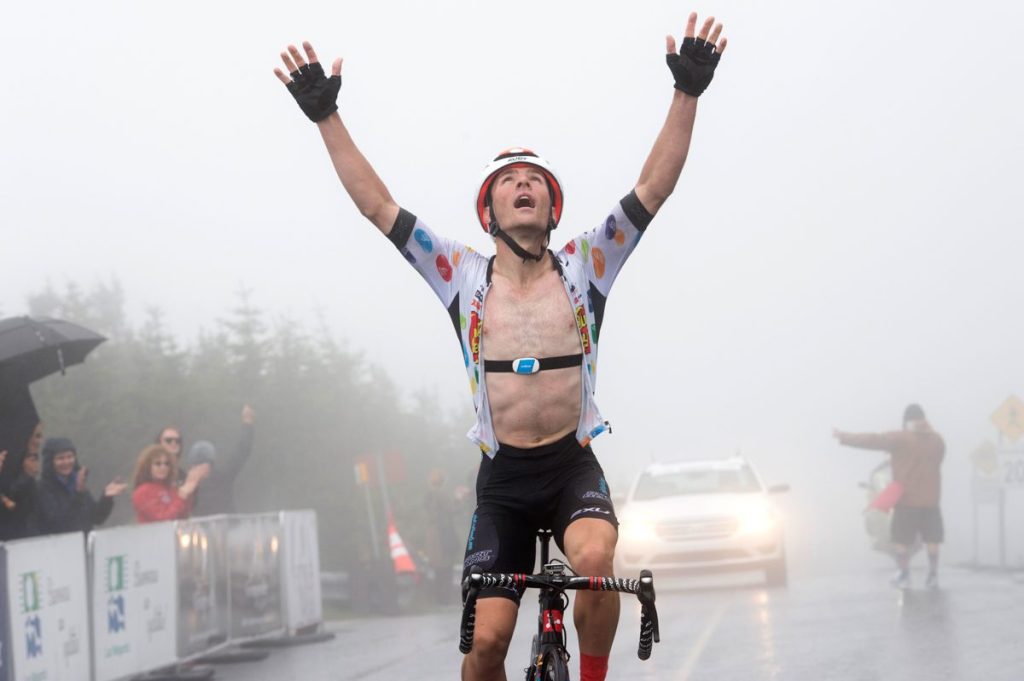
La colazione è quasi sempre farina d’avena con forse un po’ di miele o cereali Cini Mini mescolati se ho bisogno di motivazione mentale. Mangio anche uova quasi ogni giorno. Negli ultimi 15 anni della mia vita, la colazione è fondamentalmente una variazione di uova e farina d’avena. Inoltre, quando mangi proteine prima dei carboidrati, ottieni meno di un picco glicemico (crollo dello zucchero)
Ecco un consiglio. Se hai voglia di cioccolato, in particolare di cioccolato fondente, probabilmente sei a corto di magnesio e questo è comune perché perdiamo così tanto attraverso il sudore. Aggiungo il cacao crudo in polvere (il tipo senza zucchero) alla mia farina d’avena e questo aiuta molto.
Non pranzo mai. O sono in bici o nei miei giorni di riposo, lavoro tutta la mattina e poi non faccio colazione fino a mezzogiorno-14,00 solo perché il mio cervello funziona meglio solo con il caffè nero.
Cena, questo cambia davvero in base a quello che è l’allenamento del giorno dopo. Se ho una grande giornata di allenamento, è un sacco di pasta o risotto.
Vorrei mangiare più carne, ma ora sono quasi vegetariano per la maggior parte del tempo perché ho finito il tempo per cucinare. Devo dire che mi sento così bene il giorno dopo dopo aver mangiato un po’ di carne rossa. Se vuoi un modo semplice per vedere se sei a corto di ferro o vitamine del gruppo B. Compra del fegato di vitello biologico e mangialo per cena. Se il giorno dopo ti senti come Superman, probabilmente eri a corto di quelle cose e ne hai appena avuto un bel colpo.
L’altra cosa è che quando ti alleni così tanto, devi lasciare molto spazio per assumere abbastanza carboidrati in modo che non rimanga molto per mangiare carne ogni giorno.
Gli unici integratori che prendo sono il ferro e le vitamine del gruppo B. A volte la vitamina D ma di solito me ne dimentico. Ho davvero cercato di entrare molto nel Bi carb per i miei intervalli più brevi, ma non sono ancora sicuro se mi piacciono gli effetti o meno. Bevo troppa Red Bull ma mi piace fare le cose. Non assumo caffeina dopo le 2 del pomeriggio.
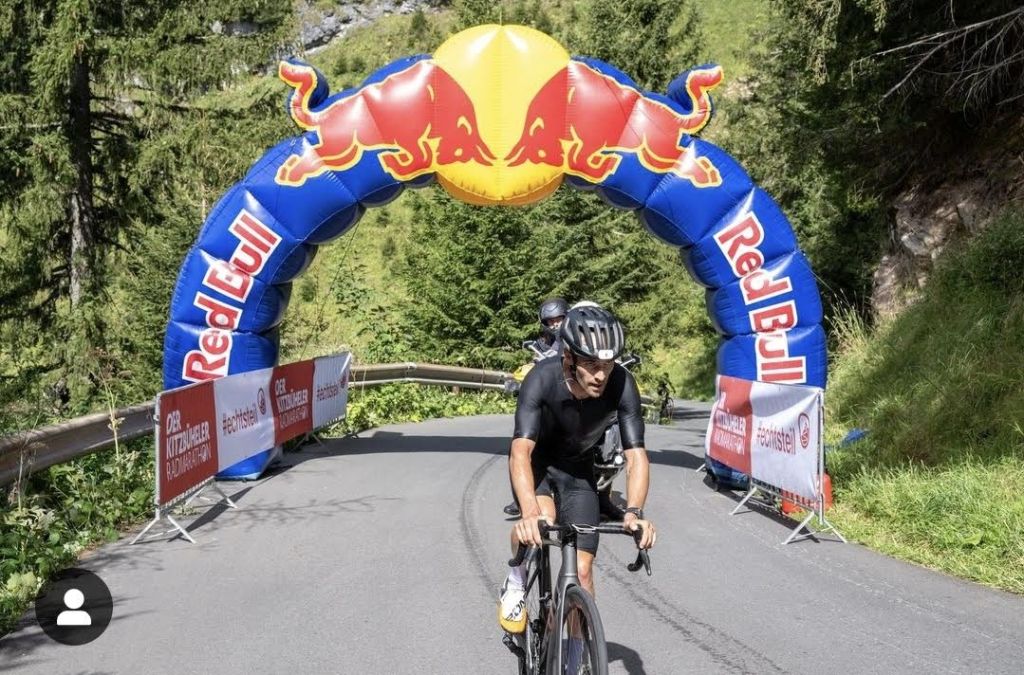
Non tengo i dolci in casa perché non ce la fanno a passare la notte. Inoltre, se voglio un dolcetto, vado alla stazione di servizio e poi mi sento più speciale ed è solo quando lo voglio davvero.
Sulla bici ho la mia alimentazione go fast e go-slow. In breve, go slow è più barrette di cereali con pochi grassi e un po’ di proteine. Go fast è zucchero, quindi o normale zucchero da tavola, sprite o coca cola nelle mie bottiglie e Haribo (marca di caramelle) nelle mie tasche per i giorni di digiuno.
Prestazioni, andare al fast-food è piuttosto malsano ma ho provato a prendere un integratore della Super Greens per alcuni mesi per vedere se notavo una differenza e non l’ha fatto, quindi ho smesso. Le proteine isolate del siero di latte sono ottime e lo mescolo con un po’ di zucchero da tavola per aiutare con l’assorbimento.
La mia dieta suona come uno scherzo ed è così che la penso ora, ma la realtà è che sono stato un pazzo per 15 anni e quindi ora prendo le cose più importanti senza pensarci. Se mangi abbastanza i 2 pasti prima dell’allenamento e durante l’allenamento, Il tuo allenamento sarà fantastico; recuperi meglio e non hai fame dopo.
Se assumi abbastanza proteine, tutto il resto va al suo posto da solo. Limitare il grasso è solo disciplina, ma ormai per me è con il pilota automatico.
8) Per un amatore che vuole affrontare una maratona impegnativa come la Ötztaler che preparazione consigli in termini di: quanti mesi prima iniziare a preparala, quante ore settimanali dedicare all’allenamento; quanti lunghi fare e con quale durata e dislivello; sviluppare la forza/resistenza in palestra o con le ripetute in salita?
Mi ci sono voluti letteralmente diversi libri per rispondere a questa domanda ahahah. Se qualcuno potesse pedalare regolarmente 8-12 ore a settimana, quindi allenarsi seriamente per 3 mesi prima e attenersi a 10-15 ore a settimana per quei 3 mesi con alcuni intervalli adeguati ecc., Penso che si potrebbe fare abbastanza bene. Non vincere, ma se hai un livello base e poi ti concentri davvero per 3 mesi e hai appena fatto la parte di allenamento perfetta per 3 mesi, rimarrai stupito di quanto puoi migliorare.
Se hai meno di 15 ore a settimana di allenamento, trascorrile tutte in bicicletta.
Questo è così semplice che non voglio nemmeno dirlo, ma la risposta più da asilo che potrei darti. Per 3 mesi prima di una di queste gare, se hai una media di 15 ore a settimana in bici e hai provato a fare il maggior numero possibile di intervalli lunghi 10-40 minuti a circa l’80% della tua frequenza cardiaca massima. Progredivi così rapidamente. Ad esempio, forse all’inizio puoi gestire 2 ore a settimana di intervallo in quella zona, ma alla fine stai facendo 8 ore a settimana in quella zona. Questo non è un piano di allenamento, c’è molto di più che dovresti fare, ma questa è una zona di allenamento abbastanza efficace per aumentare la forma fisica di cui hai bisogno in modo efficiente. Trasformalo in un gioco e vedi quanto tempo alla settimana puoi guidare in quella zona. Non andare più forte, né con una pedalata di resistenza intorno al 60-70% della FC massima che con lunghi intervalli all’80%. L’intervallo più breve può essere di 10 minuti e il più lungo è di 40 minuti. Se la maggior parte degli amatori lo facesse più e più volte migliorerebbe tanto.
Pochi di loro lo fanno, però, vanno su e giù tutto il giorno tutti i giorni, quindi se gli si desse solo questi intervalli, quella quantità di struttura aiuterebbe molto, credo.
9) Pensi che il recupero sia importante tanto quanto l’allenamento? Il giorno dopo una lunga distanza è meglio fare riposo assoluto o scarico? Riposare bene dormendo molte ore ogni notte (minimo 8/9) ed andare a letto presto lo ritieni fondamentale?
Ancora una volta, l’ho fatto perfettamente per 15 anni, ma ora sono un disastro per questo. Quando non mi alleno, sono seduto alla mia scrivania e questo è un ottimo riposo per me perché mi aiuta anche a staccare la spina. 8 ore di sonno a notte sono piuttosto essenziali. La mia camera da letto è completamente nera anche a metà giornata e mi piace mantenere la camera da letto fredda perché il mio sonno profondo è molto migliore. Un proiettore è molto meglio di uno schermo che fa esplodere la luce blu nei tuoi occhi. Non vado più in bicicletta nei miei giorni di riposo, lavoro e basta. Dopo una giornata di allenamento davvero intensa, normalmente faccio un giro di resistenza facile di 3-4 ore e poi un giorno di riposo.
Dormo quando posso. Spesso lavoro fino a tardi e non riesco a preparare la cena fino alle 21-22, il che non è eccezionale, ma finché il tuo ambiente di sonno è fantastico e ho reso il mio perfetto dai miei anni da professionista, allora se riesci a fare le 7-8 ore, per me va bene perché correre non è più il mio lavoro. In un mondo perfetto, andare a letto e svegliarsi alla stessa ora ogni giorno sarebbe fantastico da fare di nuovo, ma non è la mia vita ora. Per quanto mi riguarda, ho bisogno di una stanza completamente buia e silenziosa. Non assumo caffeina dopo le 14 e se lavoro fino a tardi, dormo fino a tardi il giorno dopo in modo da poter cercare di ottenere 7-8 ore. Per me, questo è il 90% in più rispetto a quando ero un professionista e questo perché amo quello che faccio ora, quindi lavorare molto mi dà energia, non mi prosciuga. Davvero si può arrivare al 90% del percorso solo facendo questo e quell’ultimo 10%? Se non stai correndo nel world tour e vieni pagato un sacco di soldi per correre con la tua bici, questo va benissimo. Goditi anche la vita. Investi il tempo per rendere perfetto il tuo ambiente di sonno ed è una configurazione una tantum.
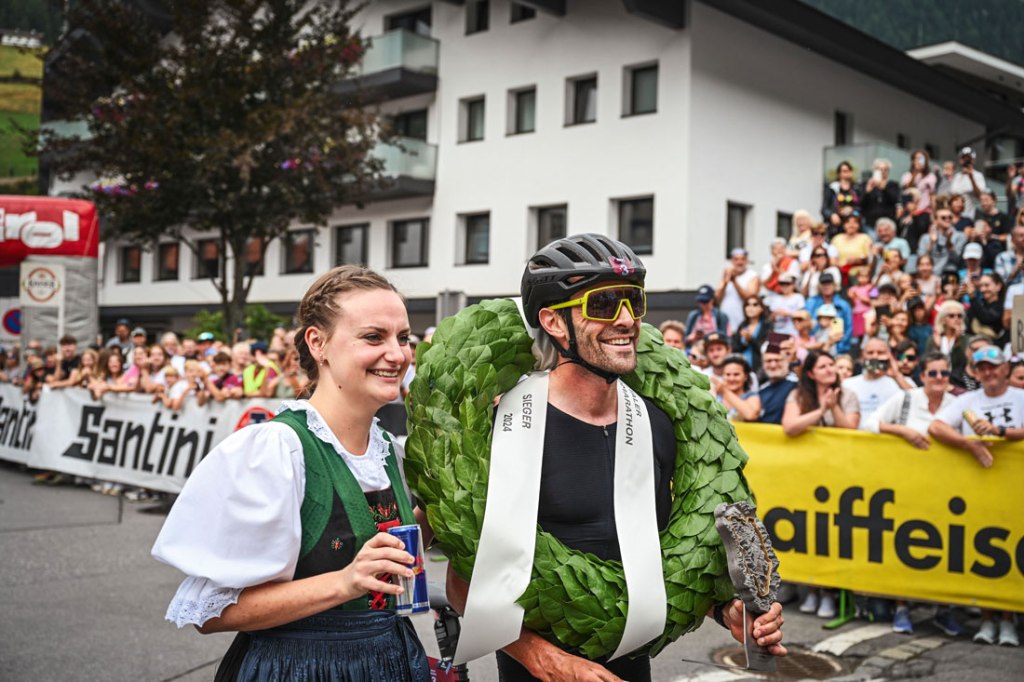
10) Quali sono i tuoi obiettivi per il 2025? In quali gare ti vedremo il prossimo anno?
Haha bella domanda! Se avessi la possibilità di essere di nuovo un professionista su strada, lo farei. Se no, le gare di granfondo amatoriali, mi piacerebbe provare a vincere i Campionati del Mondo di Mountain Bike Marathon perché voglio davvero la mia maglia iridata e forse un po’ le gare gravel, ma questa è la terza priorità. Mi piacerebbe anche provare a salire sul podio in una Coppa del Mondo di sci-alpinismo quest’inverno, quindi questi sono gli obiettivi per ora.
Ecco i link per seguire Jack sulle sue pagine social e su strava:
Instagram: https://www.instagram.com/jburke95/
Strava: https://www.strava.com/athletes/1621446?oq=jack
ENGLISH TEXT
Jack Burke, the writer cyclist.
He comes from Canada to try to climb World Tour cycling, but a bad accident in 2022 plunges him to the end of the tunnel, almost ending his career. He doesn’t give up, gets back up, writes a successful book for aspiring Pro Cyclists and goes on to win the Ötztaler Radmarathon 2024.
Interview by Leonardo Olmi.
We had the pleasure of meeting Jack Burke, the king of the 2024 granfondos, who kindly gave us this exclusive interview, full of very interesting insights on training and nutrition for amateur cycling at high levels. Don’t miss a single line of what he told us.
Jack Burke was born in Toronto (Canada) in 1995. As a junior he was one of the best cyclists in North America, but he also had a great passion for skiing. Professional since 2016, he has played in various Continental cycling teams, including Leopard pro cycling, aiming for the World Tour cycling, but at the end of 2022 he was hit by a car in Austria while training, suffering a fractured back, a cerebral hemorrhage and a frightening permanent trauma to his face. To help pay for his medical bills, he began writing a training guide that turned into his first book “How To Become A Pro Cyclist with Jack Burke“. The book took off and was a huge success thanks to so many professional cyclists and coaches who shared and recommended it.
https://howtobecomeaprocyclist.com
After the success of the first book, his podcast began to grow with professionals and coaches who loved the book. The theme of the show is “to provide free cycling and training information from the world’s best riders and coaches“.
After this year’s victory at the Ötztaler Radmarathon (although he had already won the 2022 edition after another accident at the beginning of the same season where he broke his pelvis) Jack Burke entered the hearts of amateurs who saw him triumph in Sölden alone with well over 10 minutes ahead of his pursuers with a time of 6h49’14” close to the race record. But his victory was worth twice as much as what Jack had gone through the two previous years. His podcasts, his Instagram stories and his grueling training sessions in the Alps and Dolomites downloaded on Strava with crazy feats, such as his last autumn climb with Kom on the Stelvio, have made him increasingly famous and followed by amateur cyclists. But let’s give the floor to Jack Burke.
1) How old were you when you started cycling and skiing in Toronto where you were born? Why did you decide on a career as a cyclist instead of a skier, another great passion of yours if I’m not mistaken?
I actually grew up playing hockey at the highest-level kids can play in Canada then started XC mountain bike racing when I was 13-14 years old. I switched to road cycling when I was 17 years old and then I became quite successful, quickly, so I stuck with that. After I moved to Squamish, British Columbia for University, I taught myself how to XC ski because it had always seemed like such a cool sport I could never do when I lived in Toronto and it’s the best way to train there in the Mountains in Canada in the winter. I didn’t start XC skiing until I was in my early 20’s though.
2) Then when and where did your career as a professional cyclist begin and when did you decide to leave your country to move to Europe? Have you always lived in Austria?
I worked my way up to the top of the North American racing scene and my last year in north America was 2018. Then the last step up is to come to Europe so I came to Europe in 2019, first lived in Germany but once I came to Austria in 2020, I decided this is where I want to stay as I love the mountains and the culture of the people who live here. I love how the Austrians are so crazy about all the same sports I love and in Austria it’s so much easier to do all the sports I love compared to Canada where our access to the mountains is much more remote and dangerous.
3) Your career towards the world of the World Tour was haunted by two bad accidents in 2022, although the worst was the second with brain damage and back problems, but you always got up and never gave up. Tell us what happened and how it went, as both times you got up and then went on to win the Ötztaler Radmarathon.
In 2022 I basically bet the whole season on 3 races in June-July then broke my pelvis at the altitude camp before the first one. I rushed the rehab and was back on the bike (barely) 6 days later and was racing 4 weeks later but obviously not nearly at my best. That basically ruined my season, but by the time I was back in shape, it was the Otztaler, so winning that was such a nice end to a really hard year.
I thought my career was over in 2023 after I was hit by the car at the end of 2022 but through my podcast, I met a coach who convinced me to let him train me again but I didn’t know what we were training for. I was just working on my business at the time but my friends kept pushing me to try racing again. My coach started training me in May, got a bike to use from Scott and now I’ve won every race I’ve done this year which has been amazing. I wasn’t planning on racing this year but I love being an athlete more than anything and so I’m just enjoying it and feel very fortunate to get the opportunities to race again.
Cycling’s not cheap and you need a lot of support so I wouldn’t have had those opportunities again without these wonderful people and Scott giving me a bike to borrow.
4) What does it mean to win the Ötztaler Radmarathon, the “unofficial world championship of cycling marathon riders” and the following week the Kitzbüheler Radmarathon with a dedicated Gondola as you did this year?
It’s a dream.
I did a training camp with Chris Froome and the Tour de France team in 2021, 2 weeks before the Tour de France at their last training camp for the Tour and I always said that was the best week of my life but after winning Otzi this last year then Kitzbuel, that’s even better. It really means so much more to me than people think.
I didn’t think I’d be racing again and somehow my coach got the old Jack back. I get to do it with all my friends there supporting me. These are my home races. I live here so so many of my friends can come and be a part of it. I’ll be doing these races when I’m 100 years old, I really live for these big days out in the mountains and it’s what I’ll do till the day I die.
5) Tell us about your book “How To Become A Pro Cyclist with Jack Burke” which in addition to helping you pay for post-accident expenses is also having a great success. What are the main suggestions you give on training and nutrition for those who want to be a good amateur or a young guy who aspires to professional cycling World Tour as you aspired?
Hahaha this is such a tough one because the 2nd edition of the original book which is about to come out is a 1,000 page text book so it really is everything and way too much to summarize. If people are interested in the content I make, I’d always suggest to start with the book and if you still want more, then maybe the courses are for you, but the courses are too much and overwhelming for most people as they were originally just made for me as my giant library of training info to help me keep chasing my athletic dreams.
The book was what I made for younger me to help him, the courses are my mega library of everything for me to keep chasing those dreams and not forget everything I’ve learned from the best coaches and riders in the world I’ve had access to. I also have a podcast which is totally free, so those are great places to start.
Training and nutrition stuff is so specific but here’s some basics for most amateurs. Until you’re able to train at least 15 hours a week on the bike, just ride your bike. Focus on the basics and don’t steal time from that to do other marginal gain stuff.
Most amateurs don’t eat nearly enough on the bike and then way too much off the bike. Eat more when you’re training. Try to hit roughly 1.8-2 grams of protein per kilo of body weight per day. Almost no one does this and it’s the easiest way to lose weight if you just get this right.
Next easiest way is to limit how much fat you eat.
Every single cyclist I know who struggles with their weight and has asked me for help gets this wrong. Every one of them, so if you just did this for 6 weeks I promise you would lose weight. You can go back to whatever you want or think is healthy after, but just do this for 6 weeks and it will open your eyes to what you might have been getting wrong.
- 60-100 grams of carbs per hour when you’re training
- 2 grams of protein per kilo of body weight per day
Try to cut out all the fat from your diet. This is extreme so that’s why I only do it for that 6 weeks to show people how much they might be getting it wrong. Also, you don’t have to be crazy about it. Some fat will still end up in your diet and it’s fine to have a bit here and there from fish or an avocado occasionally but basically for 6 weeks, no butter, cheese, chocolate, nuts, seeds. So many people struggle with their weight but yet they put a scoop of nut butter on their breakfast thinking it’s protein. Yeah, and you know how many calories are in that? Or the mid ride stop and they have a cake thinking its carbs that they need. Yeah, with a ton of fat as well. You don’t need to live like this but if you go a bit extreme for a few weeks, 1) you’ll lose weight and 2) it will show you what you’re doing wrong.
If you just got those 3 things right, as long as you’re moving every day, I think it’s almost impossible to not improve your body composition or quality of your training.
6) Austria, where you live at the moment, seems to be a perfect country for bike training, full of mountains and climbs, maybe it’s too cold in winter but not for a Canadian like you, as we always see you training in short sleeves even in the rain and in the cold. We know you keep skiing for pleasure, but do you think skiing can also be a winter alternative for cycling training? Among other things, it seems to me that in the past you were also part of the Canadian national ski team at the Cortina 2024 World Championships.
Absolutely, for me XC skiing or skimo is free training because it’s fun.
My favorite time of the year is when I can ski and bike in the same day. You can pile on way more work, plus it’s just fun. When you ski, I think you can work the heart and lungs way better because you use your whole body, plus minute for minute skimo is the hardest sport in the world.
At least for me, when I go to do skimo I’m almost always between 2000 – 3000m altitude and when you do efforts at this altitude, especially the shorter VO2 max efforts, it’s insane the boost you get at sea level. I’ve done so many altitude camps over the years and tried everything. Altitude works amazing for me but by far the craziest things I see from all the different ways you can do altitude training is after a period of time when I’ve done some kind of VO2 max training at over 2,500, when you come down to sea level, even just standing around my Heart rate is so much lower.
Normal altitude camps where you live high, train low, absolutely I get a boost, but the biggest changes I notice are from that really high training. To do it on the skimo ski, I’m just having fun.
7) What is your favorite food and diet? What do you eat for breakfast, lunch and dinner during a period of intense training? Do you give importance to red meat and eggs for proteins, pasta rice and cereals for carbohydrates, fruits and vegetables for vitamins, etc. etc., or do you think that food supplements should still be added?
If people saw my diet now, they would laugh. I was nuts about my diet my whole my career but now I work so much I forget to eat and just want something fast. The other thing is “go fast/performance food” is pretty unhealthy, but this is what I do now.
Breakfast is almost always oatmeal with maybe some honey or Cini Mini’s mixed in if I need the mental motivation. I also have eggs almost every day. For the last 15 years of my life, breakfast is basically some variation of eggs and oatmeal. Also, when you eat protein before your carbs, you get less of a glycemic spike (sugar crash)
Here’s a tip. If you crave chocolate, especially dark chocolate, you’re probably low on magnesium and this is common because we lose so much through sweat. I add raw cacao powder (the type with no sugar) to my oatmeal and this helps a lot.
I never eat lunch. I’m either on the bike or on my rest days I work all morning then won’t have breakfast till noon-2pm just because my brain works better just on black coffee.
Dinner, this really changes based on what training is the next day. If I have a big training day, it’s a lot of pasta or risotto.
I wish I ate more meat but I’m almost vegetarian most of the time now because I run out of time to cook. I will say, I feel so good the next day after I have some red meat. If you want an easy way to see if you’re low on Iron or B vitamins. Buy some organic calf liver and have that for dinner. If you feel like superman the next day, you were probably low on those things and you just got a nice hit of it.
The other thing is when you train so much, you need to leave a lot of room to get in enough carbs so there isn’t much left over to be having meat every day.
The only supplements I take are Iron & b vitamins. Sometimes Vitamin D but usually I forget. I’ve really tried to get into Bi carb a lot for my shorter intervals but I’m still not sure if I like the effects or not. I drink way too much Red Bull but I like getting stuff done. I don’t have caffeine past 2pm.
I don’t keep sweets in the house because they Ain’t making it through the night. Plus, if I want a treat, I just go drive to the gas station and then it feels more special and it’s only when I really want it.
On the bike I have my go fast and go-slow nutrition. In short, go slow is more granola bars with low fat and a bit of protein. Go fast is sugar so either normal table sugar, sprite or coke in my bottles and Haribo in my pockets for the fast days.
Performance, go fast food is pretty unhealthy but I tried taking a super greens supplement for a few months to see if I noticed a difference and I didn’t so I stopped. Whey isolate is great and I mix it with some table sugar to help with absorption.
My diet sounds like a joke and that’s how I think about it now but the reality is I was a lunatic about it for 15 years and so now I get the more important stuff right without thinking about it. If you eat enough the 2 meals before training and during training, you’re training is awesome; you recover better and you’re not hungry after.
If you get in enough protein, everything else falls into place on it’s own. Limiting the fat is just discipline but that’s on auto pilot for me by now.
8) For an amateur who wants to face a demanding cycling marathon like the Ötztaler, what preparation do you recommend in terms of: how many months before starting to prepare for it, how many hours per week to devote to training; how many long distance to do and with what duration and elevation gain; develop strength/endurance in the gym or with uphill intervals?
It literally took me several books to answer this hahaha. If someone could just ride 8-12 hours a week regularly, then could train seriously for 3 months before and stick with 10-15 hours a week for those 3 months with some proper intervals etc., I think you could do quite well. Not win, but is you have a basic level then really focused for 3 months and just did the training part perfect for 3 months, you’d be amazed how much better you can get.
If you’re under 15 hours a week of training, just spend it all on the bike.
This is so basic I don’t even want to say it but the most kindergarten answer I could give you. For 3 months before one of these races, if you averaged 15 hours a week on the bike and just tried to do as many long intervals 10-40min at roughly 80% of your max heart rate. You would progress so quickly. For example, maybe at the start you can handle 2 hours per week of interval time in that zone but by the end you’re doing 8 hours a week in that zone. This is not a training plan, there is so much more you would need to do but that’s a pretty effective training zone to increase the fitness you need efficiently. Make it a game and see how much time per week you can ride in that zone. Don’t go harder, either endurance riding around 60-70% of max HR or long intervals at 80%. The shortest the interval can be is 10min and the longest is 40min. Just do that over and over again and most amateurs would do well.
Few of them do this though, they just go bananas up and down all day every day so if you just gave them these intervals, that amount of structure would help a lot, I think.
9) Do you think recovery is just as important as training? Is it better to take absolute rest or drain the day after a long distance? Do you consider it essential to rest well by sleeping many hours every night (minimum 8/9) and going to bed early?
Again, I did this perfectly for 15 years but am a disaster for it now. When I’m not training, I’m sitting at my desk and that’s great rest for me because it also helps me switch off. 8 hours of sleep a night is pretty essential. My bedroom is totally black even in the middle of the day and I like to keep the bedroom cold because my deep sleep is way better. A projector is way better than a screen blasting blue light in your eyes. I don’t ride on my rest days anymore, I just work. After a really huge day of training, normally I have a 3-4 hour easy endurance ride then a rest day.
I sleep when I can. Often, I’m working late and can’t make dinner until 9-10pm which isn’t great but as long as your sleeping environment is awesome and I made mine perfect from my years as a pro, then if you get the 7-8 hours in, for me that’s fine because racing isn’t my job anymore. In a perfect world, going to bed and waking up at the same time every day would be awesome to do again but that’s not my life now. For me, I need the room completely black and dead quiet. I don’t have caffeine past 2pm and if I’m working late, I’ll sleep in if I can the next day so I can try to get 7-8 hours. For me, that’s 90% as good as when I was a pro and that’s because I love what I do now so working a lot energizes me, it doesn’t drain me. Really you can get 90% of the way there just by doing this and that last 10%? If you’re not racing in the world tour and being paid a lot of money to race your bike, this is perfectly fine. Enjoy your life as well. Invest the time to make your sleep environment perfect and it’s a onetime set up.
10) What are your goals for 2025? In which races will we see you next year?
Haha good question! If I had the chance to be a pro on the road again, I’d go for it. If not, the amateur granfondo races, I’d like to take a swing at trying to win the mountain bike Marathon World Championships because I really want my rainbow jersey and maybe gravel racing a bit but that’s the 3rd priority. I’d also like to try and get on a podium at a Skimo World Cup this winter so those are the goals for now.
Thank you very much Jack for the time you have dedicated to us and for all the valuable advice and suggestions you have given us and we wish you the best for your future in terms of health and sport.
Here are the links to follow Jack on his social pages and on strava:
Instagram: https://www.instagram.com/jburke95/
 Il sito dedicato alla BICICLETTA e a chi va in BICI
Pingback: Jack Burke si prende anche l’Ape d’Huez su Kuss ma non su Pantani. | Il sito dedicato alla BICICLETTA e a chi va in BICI·